
For roofing contractors
Van leasing for roofers
Yes, roofing limited companies and LLPs lease tippers, dropsides and panel vans from FleetMe on business contract hire. The decision turns on strip-off waste: if you take tiles away yourself, a tipper earns its place. Sole traders hire short-term.
Get my van quote →Updated 15 October 2026 · your agreement is with FleetMe
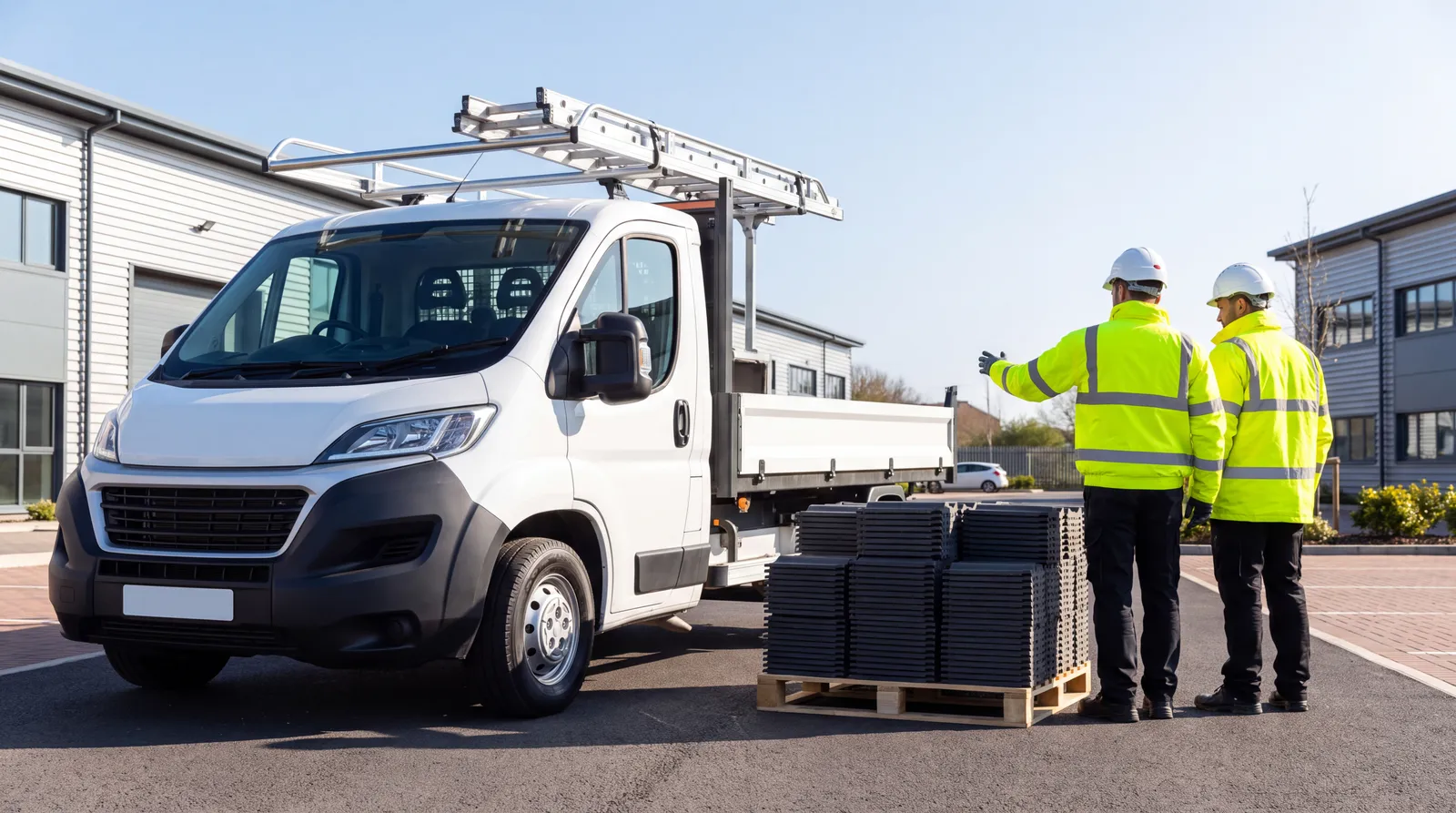
Roofing puts two awkward demands on a vehicle. Tiles, slate and cement are dense enough to hit the weight limit fast, and a strip-off produces a volume of waste that has to go somewhere. Add ladders that have to travel safely on the roof, and you have a specification worth thinking about properly rather than picking the cheapest van on a list.
Tipper, dropside or panel van for roofing?
A tipper is the honest answer for anyone doing strip-and-recover work: you load waste in and tip it out rather than handling it twice. The cost is payload, because the body and tipping gear are heavy on a 3.5-tonne chassis. A dropside is lighter and better for delivering tiles and battens on a pallet, but everything comes off by hand. A panel van keeps materials and tools dry and secure and suits repair and flat-roofing work where waste volumes are small. Plenty of roofing firms end up with one of each rather than one compromise vehicle.
How should you carry ladders safely?
Ladder carrying is where roofing vehicles most often go wrong. Roof racks and ladder systems have a manufacturer's rated load, and a stack of ladders plus a scaffold tower section can exceed it. A drop-down ladder rack costs more but saves shoulders and reduces the chance of dropping one on a customer's car. Whatever system you use, it is a modification to a vehicle we own, agree it in writing at quote stage so it is part of the specification and the end-of-contract position is clear from day one.
What about waste carrier registration and vehicle condition?
If you take waste away from a job you generally need to be a registered waste carrier with the Environment Agency, or Natural Resources Wales in Wales. Upper-tier registration carries a fee and is renewed every three years (GOV.UK, waste carrier, broker or dealer registration, 2026). Worth confirming before you build a business model around muck-away. The other thing to plan for is condition: broken tiles, felt and bitumen are hard on a load bed, and fair wear and tear has a defined meaning at the end of a contract. Read our end-of-lease condition guide now rather than in year three.
Not a limited company?
Business contract hire is for limited companies and LLPs. If you trade as a sole trader, or you want the vehicle in your own name, what we can supply is vehicle hire of up to 12 months instead. Incorporating is the step that opens up business contract hire over terms up to 12 months, which is why plenty of tradespeople do it before taking on a van.
Get a written quote
Tell us the vehicle, the mileage and how long you need it for. We come back with a written quote, and we aim to do that the same working day. We confirm which agreement applies before anything is signed.
- ✓ Your agreement is with FleetMe
- ✓ We confirm your quote in writing
- ✓ Business rentals quoted ex VAT, with VAT shown
Enquiry received, one step to go.
We can put a guide figure together from what you’ve told us. To confirm the vehicle, the monthly rental and a delivery date in writing, we need your business details and the underwriting information.
Next step · about 5 minutes
Complete your business application
It’s pre-filled from your answers. Nothing is committed until we confirm your quote and you sign.
Continue to my application →No obligation · About 5 minutes
Prefer to leave it there? We’ll still be in touch about your enquiry.
The bigger picture: UK van market figures
Source: SMMT, 2025
Source: SMMT, 2025
Source: BVRLA Leasing Outlook, 2026
UK market figures from the sources named on each card, not FleetMe's own results.
Common questions
Do roofers need a tipper?
If you strip roofs and remove the waste yourself, a tipper transforms the job. If you mainly do repairs, flat roofing or fit-only work where a skip handles the waste, a dropside or panel van is lighter and cheaper.
How much can a 3.5-tonne tipper carry in tiles?
Less than the body volume suggests, tiles and slate are dense, and the tipping body itself eats payload. Load to the weight limit rather than to the top of the sides, and weigh the vehicle loaded to be certain.
Can I fit a ladder rack to a leased vehicle?
Yes, with our written agreement before it is fitted. Keep within the manufacturer's rated roof load, and expect the contract to cover removal and reinstatement at the end of the term.
Will a scruffy load bed cost me at the end of the lease?
Normal working wear is expected; damage beyond fair wear and tear is chargeable. Knowing the standard in advance is the best protection, which is why we point every trade customer at the condition guide before they sign.
Is contract hire open to a sole trader roofer?
No, contract hire is for limited companies and LLPs. Sole traders hire on hire of up to 12 months, which works for a run of jobs. A tipper on a multi-year contract needs a company behind it.
Bodies that suit this work
What the body has to do decides the vehicle more than the badge on the front does.
Business van leasing →
How the monthly rental is built, what is included and what is not, and who it is for.
Browse the van range →
Guide rentals across small, medium and large vans, pickups and conversions.