
For builders & groundworkers
Van leasing for builders
Yes, building firms that are limited companies or LLPs lease tippers, dropsides and crew cabs from FleetMe on business contract hire. Payload decides the vehicle, because aggregates hit the 3.5-tonne limit first. Sole traders hire over terms up to 12 months.
Get my van quote →Updated 15 October 2026 · your agreement is with FleetMe
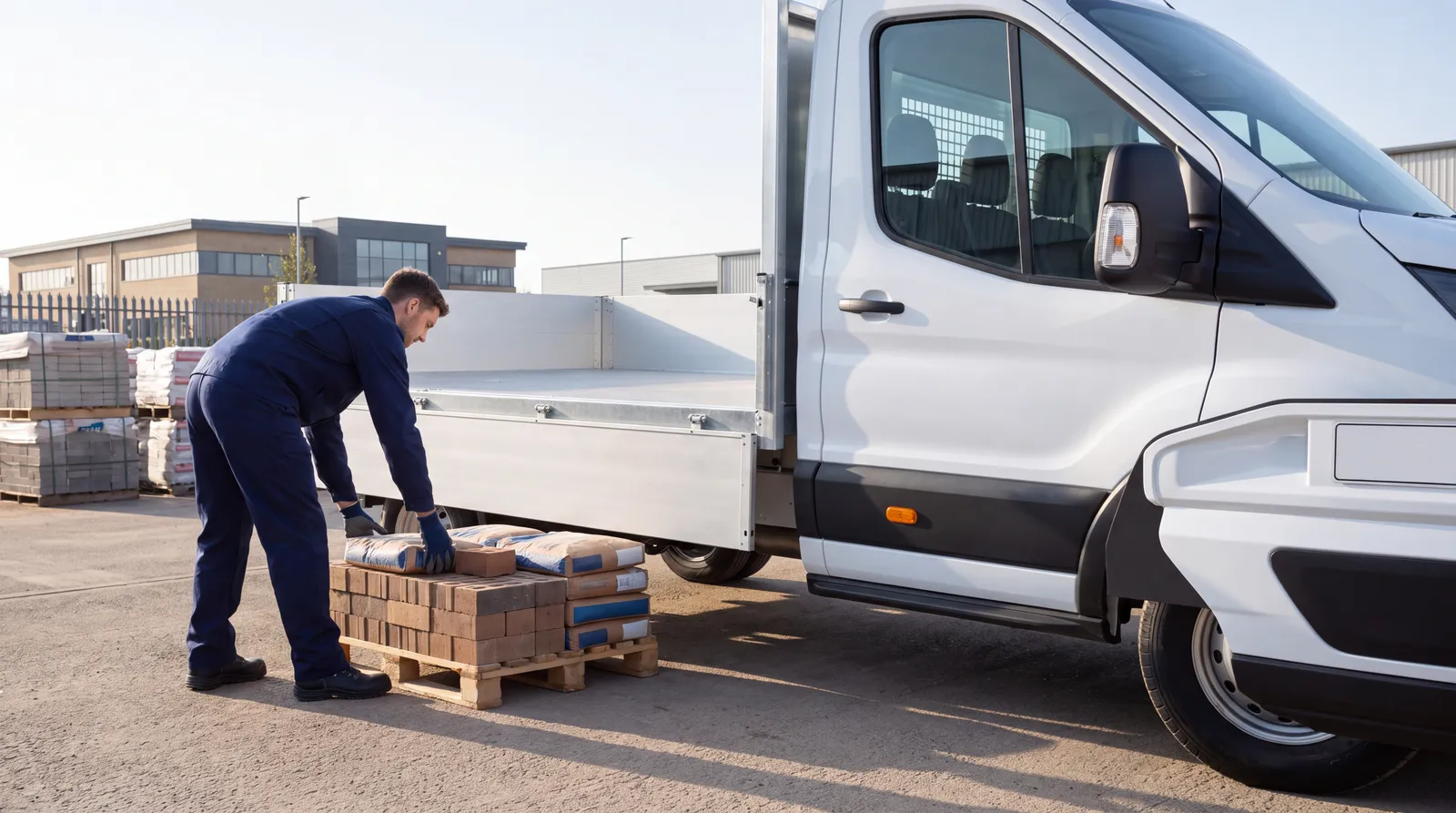
Building work is where the 3.5-tonne weight limit bites hardest. A single bulk bag of sand or ballast weighs the best part of a tonne on its own, and once you add tools, a mixer and a couple of the gang, most standard tippers are at their limit. Choosing the right body and being honest about payload is worth more than shaving a few pounds off the monthly.
Tipper, dropside or panel van?
A tipper earns its place if you move muck, spoil or aggregate and want to empty it without shovelling, the trade-off is that the tipping gear and body are heavy, so payload drops compared with a flat dropside on the same chassis. A dropside gives you three-sided access for boards, blocks and long materials and is lighter, but everything has to come off by hand or by grab. A panel van keeps tools dry and secure but is no use for loose material. Plenty of builders end up with a crew cab dropside, five or six seats plus a bed, because carrying the gang and the materials in one vehicle beats running two.
How do you work out payload and stay legal?
Take gross vehicle weight, subtract the kerb weight of the van as bodied, and what remains is your payload, and that figure has to cover the driver, passengers, fuel, tools and the load. A tipper body, a toolbox, a tail lift or a crane all reduce it before you start. DVSA can stop an overloaded vehicle at the roadside, issue a fixed penalty and prohibit it from moving until the excess is removed, so this is not a paperwork problem. If you carry aggregates, plan around one bulk bag rather than two, and weigh the vehicle loaded so you know where you stand.
What about waste carrying and the end of the contract?
If you carry waste away from jobs you generally need to be registered as a waste carrier with the Environment Agency, or Natural Resources Wales in Wales. Registration runs at two tiers, an upper tier that carries a fee and is renewed every three years, and a lower tier that is not renewed (GOV.UK, waste carrier, broker or dealer registration, 2026). Check which one your work falls into before you rely on the van for muck-away. It is also worth thinking about the end of the term now: construction work is hard on a load bed and a tipper body, and fair wear and tear has a definition, our end-of-lease condition guide sets out what is normally accepted, so there are no surprises in three years.
Not a limited company?
Business contract hire is for limited companies and LLPs. If you trade as a sole trader, or you want the vehicle in your own name, what we can supply is vehicle hire of up to 12 months instead. Incorporating is the step that opens up business contract hire over terms up to 12 months, which is why plenty of tradespeople do it before taking on a van.
Get a written quote
Tell us the vehicle, the mileage and how long you need it for. We come back with a written quote, and we aim to do that the same working day. We confirm which agreement applies before anything is signed.
- ✓ Your agreement is with FleetMe
- ✓ We confirm your quote in writing
- ✓ Business rentals quoted ex VAT, with VAT shown
Enquiry received, one step to go.
We can put a guide figure together from what you’ve told us. To confirm the vehicle, the monthly rental and a delivery date in writing, we need your business details and the underwriting information.
Next step · about 5 minutes
Complete your business application
It’s pre-filled from your answers. Nothing is committed until we confirm your quote and you sign.
Continue to my application →No obligation · About 5 minutes
Prefer to leave it there? We’ll still be in touch about your enquiry.
The bigger picture: UK van market figures
Source: SMMT, 2025
Source: SMMT, 2025
Source: BVRLA Leasing Outlook, 2026
UK market figures from the sources named on each card, not FleetMe's own results.
Common questions
How much can a 3.5-tonne tipper actually carry?
Less than most people expect, because the tipping body and gear are heavy and come out of the payload. Treat one bulk bag of aggregate plus tools and crew as a realistic working load, and check the exact figure for the model you choose.
Tipper or dropside for building work?
Tipper if you move loose material and want to empty it quickly. Dropside if you mostly carry boards, blocks and long materials and want the extra payload that comes from a lighter body.
Can I get a crew cab for the team?
Yes, crew cab dropsides and tippers are a common choice for builders. Remember that every extra passenger is roughly 75–90kg off the payload, so a full crew cab carries meaningfully less material.
Can a building firm with no filed accounts lease a van?
New limited companies are genuinely considered. Underwriting looks at the business, its directors and whether the rental is affordable, not only at years of accounts, see our page on new limited company van leasing.
I build as a sole trader, not a company, what can I get?
A sole trader takes van hire of up to 12 months rather than contract hire, which is for limited companies and LLPs. That covers a run of work well; for a tipper held on a multi-year contract, incorporating is the route.
Bodies that suit this work
What the body has to do decides the vehicle more than the badge on the front does.
Business van leasing →
How the monthly rental is built, what is included and what is not, and who it is for.
Browse the van range →
Guide rentals across small, medium and large vans, pickups and conversions.