
For businesses going electric
Electric van leasing for business
Yes. FleetMe leases electric vans to limited companies and LLPs on business contract hire. Leasing suits an EV well: you hand the vehicle back at the end of the term rather than carrying the risk of its used value.
Check my options →Updated 15 October 2026 · your agreement is with FleetMe
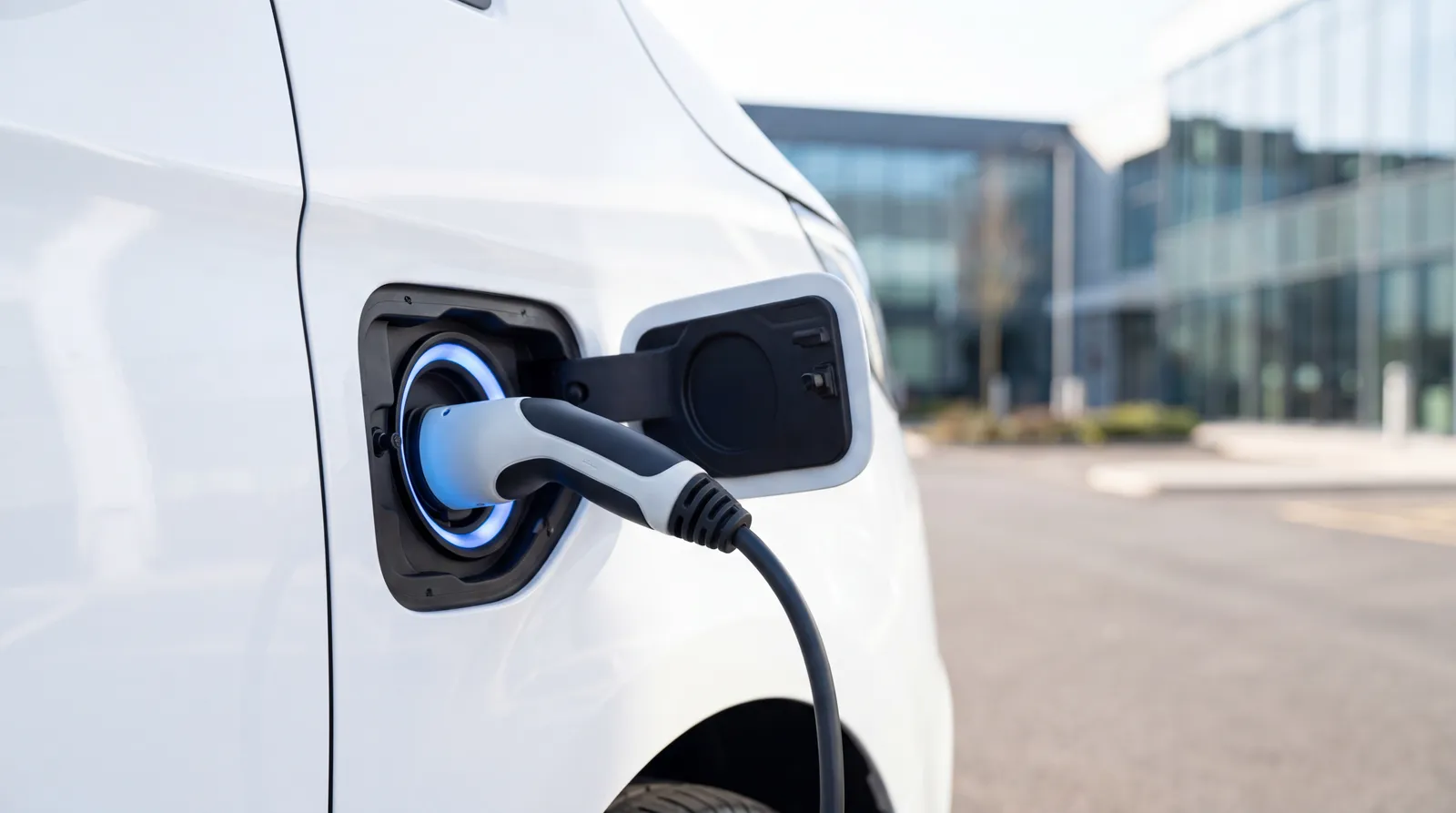
Electric vans work brilliantly for some operations and badly for others, and the difference is almost always charging rather than range. Before the rental figure matters, two questions decide it: where does the van charge overnight, and does your daily route fit comfortably inside a real-world range with a full load in January? Here is the honest picture.
What does the 4.25-tonne allowance give back in payload?
Batteries are heavy, and on a like-for-like 3,500kg chassis an electric van has historically carried less than a diesel one. The rules recognise this: a category B car licence holder can drive an electric or hydrogen-powered goods vehicle up to 4,250kg maximum authorised mass, rather than the 3,500kg limit that applies to petrol and diesel, and can still tow provided the vehicle and trailer together stay within 7,000kg (GOV.UK, Driving an electric or hydrogen-powered vehicle, updated 10 June 2025). Current guidance sets no additional-training requirement for these vehicles. On drivers' hours, zero-emission goods vehicles between 3,500kg and 4,250kg are exempt from the assimilated drivers' hours and tachograph rules, and from 1 June 2026 the Goods Vehicles (Testing, Drivers' Hours and Tachographs etc.) (Amendment) Regulations 2026 removed the 100km-from-base limit that used to cap that exemption. Journeys between Great Britain and Northern Ireland are treated differently.
What is the tax position on an electric van?
Where an employee has private use of a company van, a taxable van benefit charge normally applies — £4,170 for 2026/27, with a separate van fuel benefit charge of £798 (GOV.UK, van benefit charge and fuel benefit charges for cars and vans for tax year 2026 to 2027, published 3 December 2025). For a zero-emission van the van benefit charge has been nil since 6 April 2021, regardless of private use, which makes an electric van a genuinely valuable tax-free benefit for a driver who takes it home. On the business side, VAT-registered businesses can generally reclaim VAT on van rentals used for business, and rentals are normally treated as a deductible operating cost, your accountant confirms your position. Our tax guide covers the detail.
Is an electric van actually cheaper to run?
Depot or home charging on an overnight tariff is where an electric van's running-cost advantage lives. Rely mainly on public rapid charging and that advantage narrows sharply, because rapid charging is priced very differently from overnight electricity. Range also falls in cold weather and when the van is fully loaded, so judge a van against a bad January day, not a manufacturer figure. Where an EV wins outright is urban multi-drop: predictable routes, a lot of stop-start, and no charge to pay in London's ULEZ or the Clean Air Zones several English cities operate, see our ULEZ and CAZ guide. A government grant currently discounts eligible new electric vans at the point of sale, up to £2,500 for a van under 2,500kg gross vehicle weight and up to £5,000 for one between 2,500kg and 4,250kg, applied by the seller rather than claimed by you (GOV.UK, zero emission vehicle grants: vans, 2026). Grant levels are reset each year and the number of grants is limited, so ask us to confirm in writing whether one is in your quote; because we buy the vehicle, any grant that applies shows up in the rental.
Not a limited company?
Business contract hire is for limited companies and LLPs. If you trade as a sole trader, or you want the vehicle in your own name, what we can supply is vehicle hire of up to 12 months instead. Incorporating is the step that opens up business contract hire over terms up to 12 months, which is why plenty of tradespeople do it before taking on a van.
Get a written quote
Tell us the vehicle, the mileage and how long you need it for. We come back with a written quote, and we aim to do that the same working day. We confirm which agreement applies before anything is signed.
- ✓ Your agreement is with FleetMe
- ✓ We confirm your quote in writing
- ✓ Business rentals quoted ex VAT, with VAT shown
Enquiry received, one step to go.
We can put a guide figure together from what you’ve told us. To confirm the vehicle, the monthly rental and a delivery date in writing, we need your business details and the underwriting information.
Next step · about 5 minutes
Complete your business application
It’s pre-filled from your answers. Nothing is committed until we confirm your quote and you sign.
Continue to my application →No obligation · About 5 minutes
Prefer to leave it there? We’ll still be in touch about your enquiry.
The bigger picture: UK van market figures
Source: BVRLA Leasing Outlook, 2026
Source: SMMT, 2025
Source: SMMT, 2025
UK market figures from the sources named on each card, not FleetMe's own results.
Common questions
Can I drive a 4.25-tonne electric van on a car licence?
A category B licence holder can drive an electric or hydrogen goods vehicle up to 4,250kg maximum authorised mass, against 3,500kg for petrol and diesel, and current GOV.UK guidance sets no additional-training requirement (GOV.UK, Driving an electric or hydrogen-powered vehicle, updated 10 June 2025).
What is the company van tax on an electric van?
The van benefit charge for a zero-emission van is nil, regardless of private use. For a van that emits CO2 the charge is £4,170 for 2026/27, with a separate van fuel benefit charge of £798 (GOV.UK, van benefit charge and fuel benefit charges for cars and vans for tax year 2026 to 2027, published 3 December 2025). That makes an electric van a valuable tax-free benefit for a driver who takes it home.
Does an electric van carry less than a diesel one?
On the same 3,500kg chassis, generally yes, because the battery is heavy. The 4.25-tonne allowance for zero-emission vans is designed to give that payload back. Compare the payload figures of the specific models rather than assuming.
Is an electric van cheaper to run?
It depends almost entirely on where you charge. Overnight depot or home charging is where the saving is real. If you rely on public rapid charging the advantage narrows considerably, so work out your charging plan before the rental figure.
Can a sole trader lease an electric van?
No, contract hire is available to limited companies and LLPs only, and a sole trader would be on hire of up to 12 months. Note too that the nil van benefit charge applies to company vans and employees, so it is a limited-company advantage rather than a sole-trader one.
Business van leasing →
How the monthly rental is built, what is included and what is not, and who it is for.
Browse the van range →
Guide rentals across small, medium and large vans, pickups and conversions.